
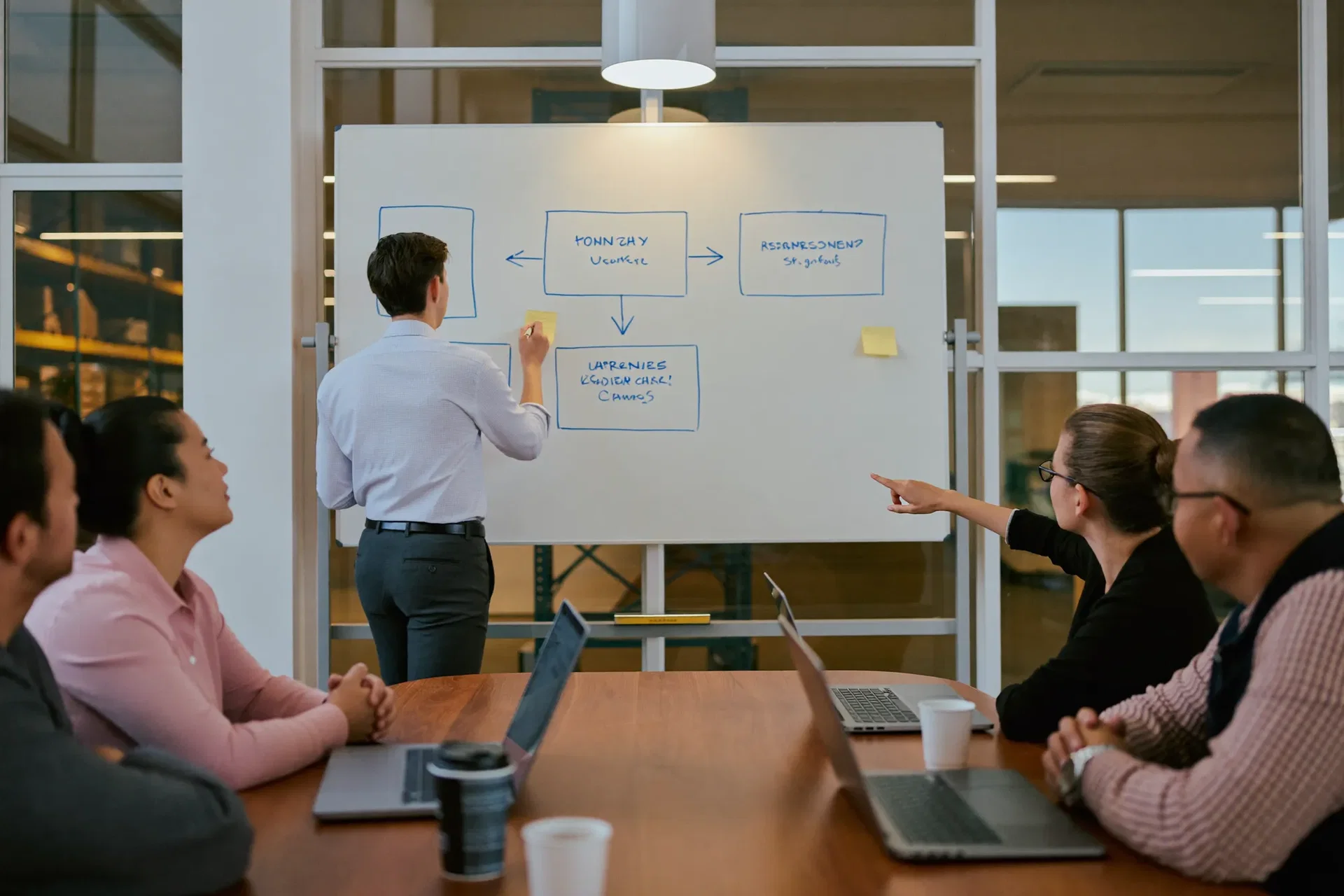


Education ERP From First Enquiry to Alumni
Index World implements education ERP for schools, colleges, universities and training institutes: admissions, enrollments, attendance, grading, fees and accounting run from one system.
Money back if we don’t deliver as agreed.How it works: Delivery Guarantee terms
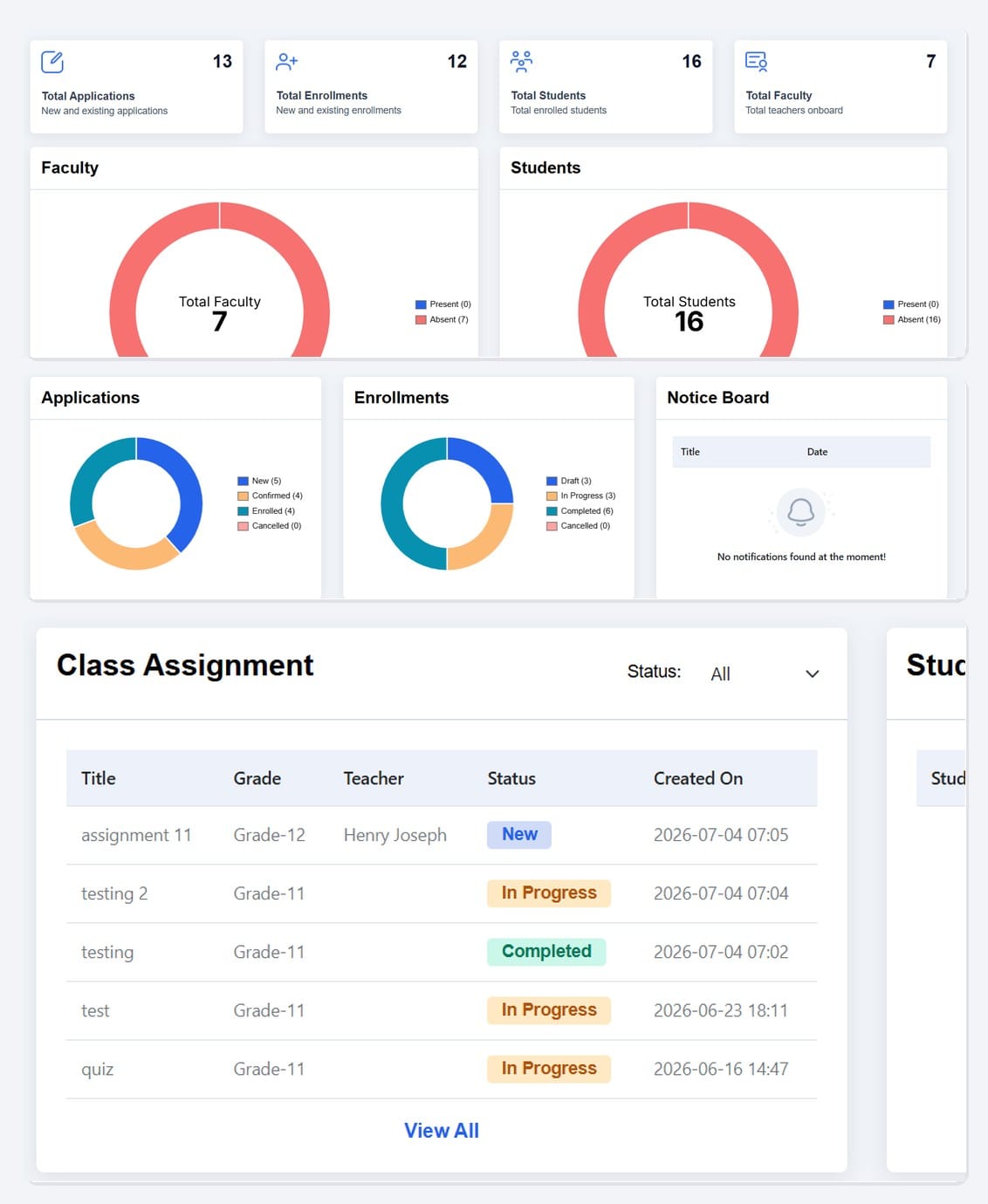

Built for How Institutions Run
Admissions, enrollments, attendance, grading, scheduling, assignments, and daily operations, managed from a single centralized system, from the first application to graduation day.
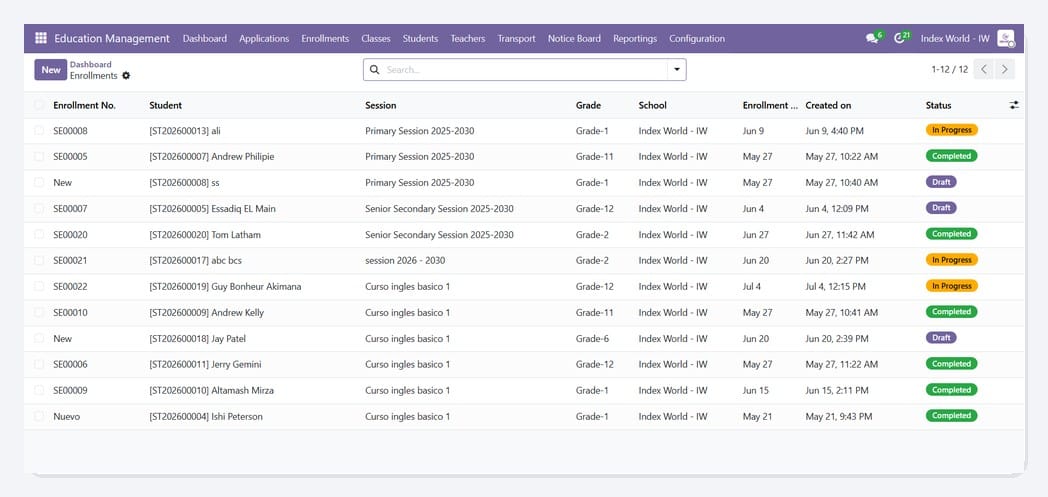
Admissions & Enrollment
Capture applications, convert them into enrollments, and define fee structures, fee elements, late-fee rules, fee slips, and payment terms against every student record.

Academics & Scheduling
Configure academic sessions, years, and terms with customizable weightage, then create classes, assign teachers, add students, and auto-generate timetables for the entire session.

eLearning & Assignments
Create assignment types, assign tasks, and evaluate submissions online. Students get a self-service portal for assignments, attendance, grades, timetables, transcripts, and announcements.

Transport & Operations
Manage routes, stops, vehicles, drivers, and student transport allocations, with trip-wise attendance so every child is accounted for on every journey.

Faculty & Staff
Teachers plan lessons, assign homework, take attendance, evaluate assignments, and record discipline actions, all against the student record, with no paperwork.

Exams & Results
Set up flexible grade scales with GPA support and grade ranges, then generate report cards and transcripts straight from recorded results.

What is education ERP software?
Education ERP software is one system that holds the student record from enquiry through enrolment, timetable, attendance, assessment and fees, so the front office, the teachers and the finance office all read the same file. School management software usually means the same system at K-12 scale.
Index World is an ERP implementation partner for educational institutions, which in practice is narrower and more useful than it sounds. We sit with the people who run your admissions desk, your bursary and your staff room, map how the work moves today and who is quietly holding it together, and only then build a single system around it. We will not name a platform until we have seen how your academic calendar, fee structures, approvals and reporting actually behave.
This is not theory for us. We have rebuilt programme-level profit-and-loss reporting for an education nonprofit, delivered a complete HR platform with recruitment pipelines, leave accrual rules, and attendance-to-payroll exports, and built education-sector reporting for a supplier serving school clients. Those systems run in production today.
School Management Software, Built to Fit
A primary school, a university faculty, and a training academy share almost nothing in how they enrol, teach, and bill. We configure the same platform very differently depending on which one you are.
K-12 Schools
Primary & Secondary
Where it hurts
Admission season overwhelms the front office, fee installments and sibling discounts are tracked by hand, and parents phone in for every grade and bus question.
What changes
Applications get stages and owners, fee slips and late-fee rules generate themselves, and parents self-serve grades, attendance, transport, and payments.
Colleges & Universities
Higher Education
Where it hurts
Departments run separate spreadsheets, credit and GPA rules differ by programme, faculty workload is invisible, and no student information system holds the truth.
What changes
Programmes, terms, and weightage are configured once, transcripts generate from recorded results, and leadership sees enrolment and profitability without waiting on departments.
Training Institutes & Academies
Short Courses
Where it hurts
Batches start every few weeks, pricing changes per course, trainer availability is guesswork, and certificates are produced one at a time.
What changes
Courses, batches, and trainers are scheduled from one calendar, enrolment and payment happen online, and completion certificates issue straight from attendance and results.
Multi-Campus Groups
Networks & Branches
Where it hurts
Every campus reports differently, consolidation happens in a spreadsheet weeks late, and nobody can compare fee recovery or headcount across the group.
What changes
Each campus keeps its own fee structures, staff, routes, and calendar, while analytic accounting rolls the whole group into one consolidated dashboard view.
Not sure which pattern fits you? Our implementation team maps your processes before recommending anything.
Your ERP Should End Double Entry
The number one complaint founders and administrators have about school software is data scattered across systems: a student updated in one tool, wrong in four others. The fix is not another app. It is connecting the ones you already run, so a record entered once flows everywhere it is needed. Here is what we wire into your education ERP.
Payment Gateways
Fees
Stripe, PayPal, and regional gateways plugged into fee slips, so parents pay online and payments post to accounting automatically.
Fees collected without a queue at the office.
WhatsApp & SMS Alerts
Communication
Absence alerts, fee reminders, exam schedules, and announcements sent straight from the ERP to every parent’s phone.
Parents informed without a single phone call.
LMS & Virtual Classrooms
Teaching
Moodle, Google Classroom, Zoom, and Teams connected so courses, enrollments, and live classes sync with student records.
Teaching tools and admin finally share one student list.
Biometric & RFID Attendance
Attendance
Fingerprint and card devices writing attendance into the ERP the moment a student or teacher walks in.
Attendance captured with zero registers.
Google Workspace & Microsoft 365
Productivity
School email, calendars, and documents linked to ERP records and logins.
One identity across every tool your staff opens.
Accounting Platforms
Finance
Xero, QuickBooks, and bank feeds reconciled against fee income, a workflow we maintain in production for an education client today.
Books that agree with enrollment, every month.
Payroll Systems
HR
Staff attendance and leave flowing into payroll processing, including exports to providers like ADP, delivered end to end for clients.
Salary runs without spreadsheet gymnastics.
Transport & GPS Tracking
Safety
Vehicle tracking tied to routes and trip-wise attendance, so every child is accounted for on every journey.
Parents see the bus; you see every rider.
BI & Reporting Dashboards
Leadership
Power BI dashboards over enrollment, fee recovery, and program profitability, refreshed automatically.
Board answers in minutes, not month-end.
Do not see the tool you run? An open API means if it can talk, we can connect it. Ask us about yours.

How It Works, Your Path to Go-Live
A phased, proven path: most institutions are live within 8–12 weeks, with the cutover timed around your academic calendar.
Discovery & process audit
We map your admission cycle, fee structures, academic calendar, and reporting needs before touching configuration.
Solution design
You get a blueprint of modules, portals, integrations, and data migration scoped to your institution. No surprises later.
Build & configure
We configure sessions, classes, grade scales, fee structures, and transport routes, migrate your data, and validate every flow on staging first.
Train & go live
Role-based training for admissions, faculty, and finance teams, then a supported cutover timed to your term dates.
Optimize & grow
Post-go-live support, new module rollouts, and reporting refinements as your institution grows.
Got questions? We’ve got answers.
Can an ERP really manage a school or college, not just a business?
Yes. Our Education Management build most often runs on Odoo, and handles applications, enrollments, classes, teachers, timetables, assignments, grading, fee structures, transport, and notice boards, with student and parent portals on top. Odoo’s Accounting and HR modules handle the finance and payroll side, so the whole institution runs in one database. We also deliver on Sage, NetSuite and Microsoft Dynamics, and which one you land on is settled after we have seen your academic calendar and fee structures, not before.
Will it integrate with the tools we already use?
Yes. We connect the platform to payment gateways for online fee collection, Google Workspace and Microsoft 365 email, biometric attendance devices, and external accounting platforms. We actively maintain Odoo-and-Xero workflows for an education-sector client today, so cross-platform financial reporting is familiar ground for our team.
How long does an education ERP implementation take?
Most institutions go live in 8–12 weeks, rolled out in phases so admissions and fee billing start delivering value while later modules are still being configured. Migration of student records and opening balances is part of the plan, and we time the cutover to your term boundaries, never mid-exam season.
Can it handle multiple campuses or branches?
Yes. The platform’s multi-company structure supports separate campuses with their own fee structures, staff, transport routes, and academic calendars, while analytic accounting rolls everything up into consolidated group reporting. Role-based access keeps each campus team focused on its own students, and leadership sees the whole network on one dashboard.
What is school management software, and is it different from an education ERP?
In practice they are the same thing. School management software, school ERP, education ERP, and student information system all describe one platform that centralizes admissions, student records, attendance, grading, timetables, fees, and reporting for an institution. “ERP” is the older term borrowed from manufacturing; “school management software” is the plainer modern name for it. What matters is not the label but whether every department works from a single database instead of separate tools.
Is there a mobile app for parents, students, and teachers?
Yes. Parents, students, and staff access their portals from a phone as well as a desktop, so guardians can check attendance, grades, and fee balances and pay online without visiting the office. Teachers can take attendance and review assignments from a mobile device, and announcements reach families through the notice board plus WhatsApp or SMS alerts.
What training and support do we get after go-live?
Training is delivered by role rather than by module, so your admissions officer, bursar, and class teachers each learn only the screens they use. After cutover you get ongoing support, new module rollouts, and reporting refinements as the institution grows. More detail on our training and support plans.
How much can the system be customized to how we already work?
A great deal, and that is exactly why it needs discipline. Fee structures, grade scales, academic terms, approval workflows, and report layouts are all configurable to your policies. Where we push back is on customization that simply recreates an old paper process in software. That inflates cost and makes future upgrades harder. Our customization approach favours configuring the standard platform wherever it will do the job.
What reporting do leadership and the board actually get?
Live dashboards covering enrollment counts, fee recovery, outstanding dues, staff costs, and programme profitability, per campus and per programme, refreshed as the underlying records change rather than compiled at month end. Where deeper analysis is needed we build it out in Power BI on top of the same data, so the board and the finance office are never arguing about whose figure is right.